
Flexion-Distraction in Council Bluffs
Gentle flexion-distraction in Council Bluffs, IA — a hands-on, non-surgical technique that opens the lumbar disc space to relieve disc and sciatic pain.
Schanuth Family Chiropractic
Flexion-Distraction in Council Bluffs
Flexion-distraction is a gentle, hands-on chiropractic technique performed on a specialized segmented table that gently flexes and distracts the lower spine. By easing pressure on discs and nerves without twisting or high-velocity thrusts, it offers Council Bluffs-area patients a comfortable, non-surgical path to relief from disc-related pain, sciatica, and leg symptoms that haven't responded to other care.
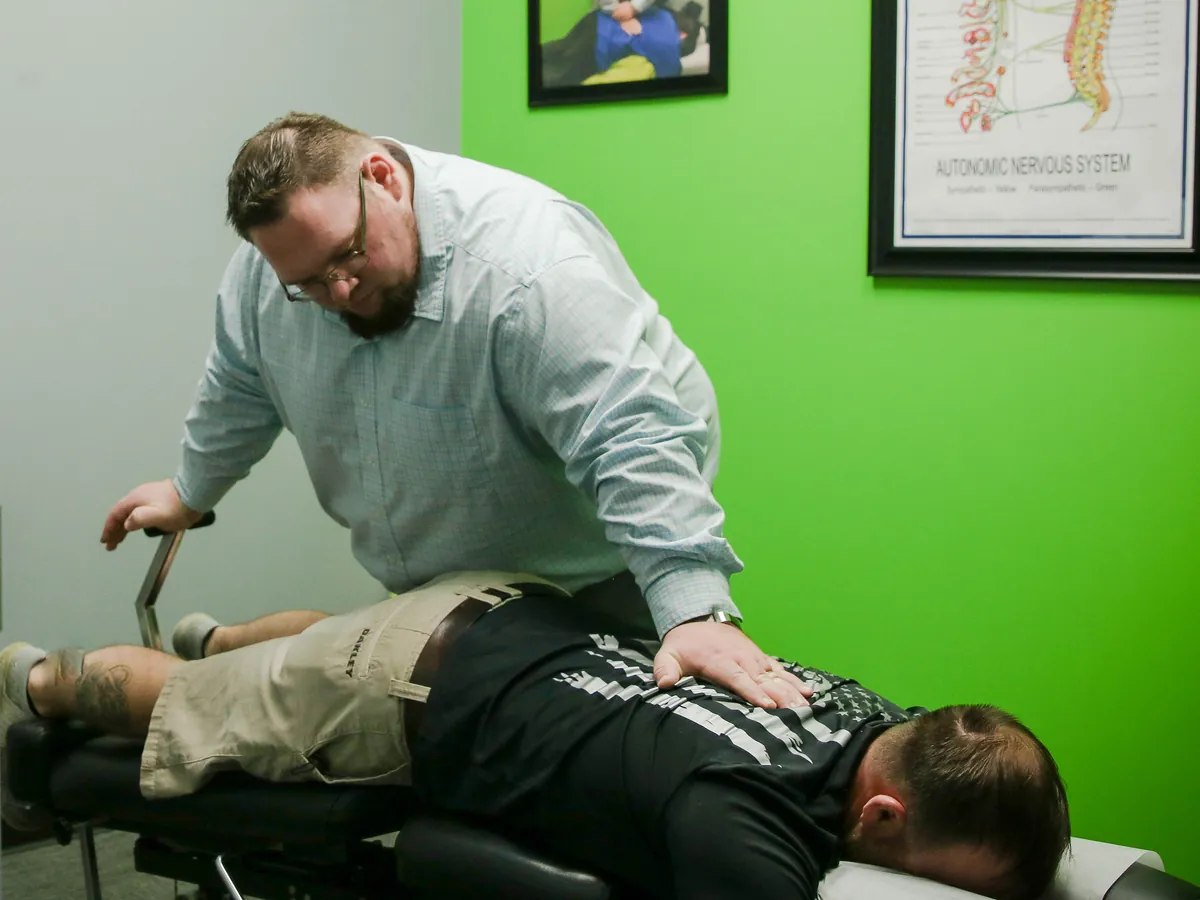

How it works
What to expect with flexion-distraction
- Step 1
Thorough exam first
We review your history and perform orthopedic, neurological, and movement testing to confirm which disc level is involved, rule out contraindications, and determine whether flexion-distraction is the right fit for your spine — X-rays are taken for most patients to see exactly what's happening at the disc level.
- Step 2
A personalized care plan
You get a plain-English explanation of your findings and a plan to get you out of pain — then we transition you into long-term wellness care to keep your spine in the best condition possible.
- Step 3
Hands-on table work
Each session combines the flexion-distraction technique with any needed adjustments.
Why patients choose it
Benefits of flexion-distraction
Drug-free, non-surgical disc and nerve relief
Comfortable, controlled motion — no high-velocity thrusting
Increases disc height and reduces nerve root pressure
Suitable for most ages, including older adults
Pairs naturally with spinal adjustments
Documented improvement in pain and range of motion
The basics
About flexion-distraction
The lumbar discs act as shock-absorbing cushions between each vertebra. When a disc bulges, herniates, or begins to degenerate, it can press on nearby nerves and trigger pain, numbness, or weakness that radiates into the leg. Flexion- distraction addresses this by gently cycling the spine through a pumping motion that increases disc height, reduces pressure inside the disc, and encourages nutrients and fluid back into the disc tissue.
Unlike motorized traction, flexion-distraction is guided entirely by the doctor's hands, which means each movement is tailored to what that specific spinal level needs in real time. The result is a highly controlled, highly comfortable session that patients often describe as relaxing — and a treatment that pairs naturally with spinal adjustments for lasting results.

New Patient Special
$50
Consultation, Exam, X-rays (required for most patients), and Report of Findings.
There is no risk to see what we can do for you. Request an appointment and we'll call to confirm a time that works.
(712) 828-0621(Adjustment Not Included) *Does not apply to Medicaid or Medicare*
Request your appointment
What is flexion-distraction?
Flexion-distraction is a hands-on chiropractic technique developed by Dr. James Cox in the 1960s and one of the most widely researched conservative treatments for lumbar disc conditions. The patient lies face-down on a specialized table whose lower section can move — flexing, extending, and laterally tilting under the doctor’s guidance. While the table creates a gentle distraction force, Dr. Schanuth applies light, controlled pressure to the affected spinal level, producing a rhythmic pumping motion that gently opens the disc space and surrounding joints.
The goal is to increase the height of the disc space, reduce the internal disc pressure (which can help a bulging or herniated disc retract), decrease nerve root pressure, and restore normal motion to the lumbar spine — all without surgery, injections, or high-velocity thrusting.
What to expect
Your first session begins with a brief re-assessment to confirm the target level and set a comfortable range of motion on the table. Once you’re positioned face-down and relaxed, Dr. Schanuth moves the table’s lower section through a slow, rhythmic flex-and-distract cycle — roughly 5 minutes per session. You’ll feel a gentle, rhythmic pull across your lower back; most patients describe it as immediately relieving.
Because the technique is entirely hands-on, the doctor can adjust the force and direction moment-to-moment based on how your spine responds. Sessions are typically combined with any targeted adjustments you need that day.
Who it helps
Flexion-distraction is a strong fit for patients dealing with:
- Disc injuries — herniated, bulging, or degenerative discs causing local or radiating pain
- Sciatica — leg pain, numbness, or tingling traced back to lumbar nerve root compression
- Back pain — especially chronic low-back pain that hasn’t fully responded to adjustments alone
- Pinched nerves in the lumbar spine — facet-related or foraminal narrowing
- Older adults or patients who prefer a very gentle approach to lumbar care
- Post-surgical patients (with physician clearance) seeking conservative maintenance
If you’re not sure whether you’re a candidate, the answer starts with an exam — not guesswork.
Why choose Schanuth Family Chiropractic
At Schanuth Family Chiropractic, Dr. Nathan Schanuth brings together flexion-distraction and spinal adjustments into one cohesive plan built around your specific findings. Patients from Council Bluffs, Omaha, Carter Lake, Crescent, Underwood, Treynor, Carson, and Glenwood trust us because we give them a straight answer about what’s driving their pain and a plan to fix it — then help transition you into long-term maintenance care to keep you feeling your best.
Ready to see whether flexion-distraction is right for your back or sciatic pain? Check out our New Patient Special and book an appointment online in under a minute.
What it helps
Conditions we treat with flexion-distraction
What is flexion-distraction?+
Flexion-distraction is a hands-on chiropractic technique performed on a segmented table. The doctor gently flexes and distracts the lower spine in a rhythmic, pumping motion that opens the disc space, reduces nerve pressure, and improves spinal mobility — all without forceful thrusts.
Does flexion-distraction hurt?+
Most patients find it comfortable or even relaxing. Because the force is gentle and guided entirely by the doctor's hands, it rarely causes the soreness that sometimes follows high-velocity adjustments. A little post-session muscle fatigue is normal and typically fades within a day.
What conditions does flexion-distraction treat?+
It's used most often for lumbar disc herniations or bulges, sciatica, degenerative disc disease, facet syndrome, and low back pain with leg symptoms. It can also benefit spinal stenosis and some cases of scoliosis-related discomfort.
How is flexion-distraction different from spinal decompression?+
They are different techniques. Motorized spinal decompression uses a computer-controlled table and traction harness, and it is not something our office offers. Flexion-distraction is entirely hands-on — the doctor controls every movement in real time, which allows precise targeting of individual spinal segments and makes it a gentler option for many patients.
How many sessions will I need?+
Each patient's targeted treatment time is different. After your exam, Dr. Schanuth will recommend a specific plan based on your condition and how your spine responds to care. There's no set end date — once your pain is resolved, we transition you into wellness care to help you stay that way.
Is flexion-distraction safe?+
Yes. It's one of the most researched conservative treatments for lumbar disc conditions and is considered very safe when performed by a trained chiropractor. We screen every patient before starting and do not use this technique in the presence of fractures, certain tumors, or severe osteoporosis.
Will my insurance cover flexion-distraction?+
Many major plans cover chiropractic services, including the manipulation component of flexion-distraction. We'll verify your benefits before your first visit and walk you through any out-of-pocket cost. Affordable self-pay options are available.
Can flexion-distraction help my sciatica?+
Often, yes. By increasing the disc space and reducing pressure on the nerve root, flexion-distraction directly targets the mechanical cause of most sciatic pain. Many patients notice reduced leg pain within the first few sessions.
Do I need imaging before starting care?+
Yes — X-rays are taken for most patients before starting flexion-distraction care. Seeing the exact position and condition of your spine and discs allows Dr. Schanuth to tailor your care plan precisely to what your spine needs.
What should I do at home between sessions?+
Stay gently active — walking is ideal. Avoid prolonged sitting or bending that worsens your symptoms.
Explore more
Related services
Patient reviews
What our Council Bluffs patients say
“Boat chiropractor in the area!”
“Great place to go when you are in pain! I'm very happy with their service!”
“Timely and efficient, no waiting and thoroughly discussed issues and treatment plan. So far I have made solid gains!”